Your partner for AR that opens from a link, no app download in the way
Augmented reality that runs in the phone's web browser, on the iPhones and Android phones your audience already carries.
Every app install you ask for costs you most of your audience. WebAR skips that step entirely: someone scans a QR code or taps a link, their phone camera opens, and the experience is just there. For campaigns, packaging and events, that difference decides whether the AR gets used or ignored.
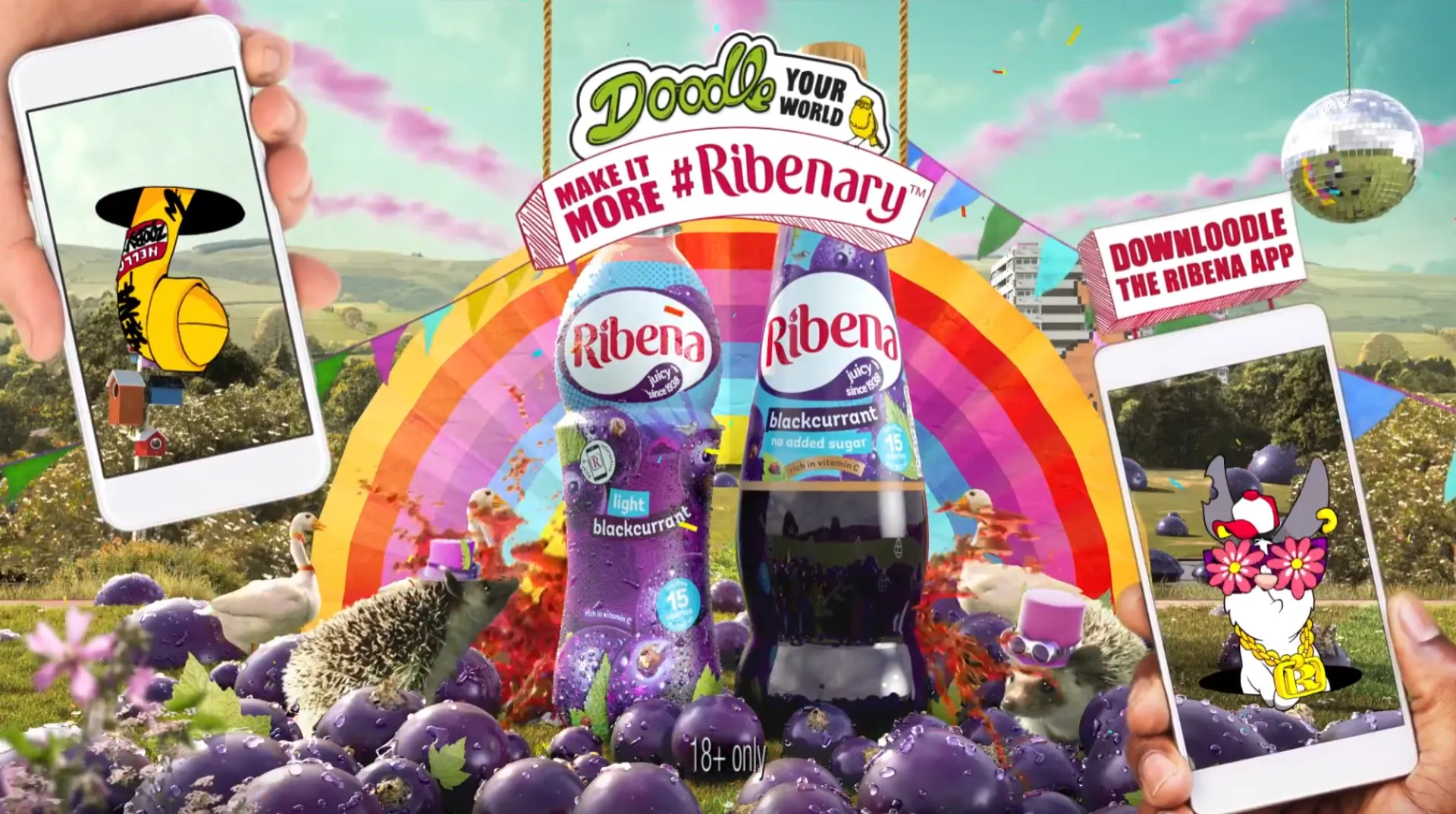
Pictured: Ribena's Doodle Your World, a SLAM-tracked AR app we built that anchors animated characters into the real world; the same tracking craft, applied in the browser, is what makes WebAR feel solid.
What's included
We build WebAR on the same 3D web stack as the rest of our augmented reality work, so the experience is designed around what a phone browser can genuinely do well rather than what a concept video promised.
- WebAR campaign & packaging experiences
- QR-code launched activations for events & retail
- Three.js & Babylon.js development
- Markerless tracking & surface anchoring
- AR product try-outs & configurators
- 3D asset optimisation for mobile browsers
Common questions
What's the difference between WebAR and an AR app?
WebAR runs in the phone's browser, nothing to install, which makes it ideal for one-off campaigns and reaching people cold. A native app tracks more precisely and can do more, but only makes sense when AR is a repeat-use part of your product. We build both, so the recommendation isn't biased either way.
Which phones does it work on?
Recent iPhones and Android phones in their standard browsers cover the large majority of real-world users. We agree the device baseline up front and design a graceful fallback (a 3D viewer rather than a broken screen) for anything older.
How do people actually get into the experience?
Usually a QR code on packaging, a poster or a stand, or a plain link shared in a campaign. Getting that entry moment right (what people see in the first three seconds after scanning) is something we design deliberately, because it's where most WebAR loses people.
What are WebAR's honest limits?
Browser AR has less access to the phone's sensors than a native app, so extremely precise tracking, heavy 3D scenes or long sessions favour going native. If your idea sits past what the browser does well, we'll say so before you've spent anything.
Can we reuse the 3D content elsewhere afterwards?
Yes. Models and animations built for WebAR can carry over to product configurators, native AR or exhibition builds, so a campaign asset doesn't have to be single-use.
Has WebAR got cheaper recently?
Yes, notably. 8th Wall, the most capable engine for browser-based world tracking, went open source in early 2026 after years of commercial licences running into the thousands per month. The platform cost that used to be the biggest line item in a WebAR budget is now effectively zero, which changes the economics for campaigns that wouldn't have made sense before.
Augmented Reality
Want to see more first? Take a look at our work or explore everything we build.


Meet Storm
A tight-knit, Surrey-based team with 25+ years combined experience turning ideas into finished builds.
We're hands-on at every stage, from first conversation to last line of code, on web, mobile, AR/VR and everything in between.
Meet the team














Need a tech development partner?
Let's chat on how we can help to bring your big idea to life.