Your TypeScript development partner, from interactive frontends to full applications
TypeScript development across interactive front ends, React and React Native apps, and typed APIs shared between frontend and backend.
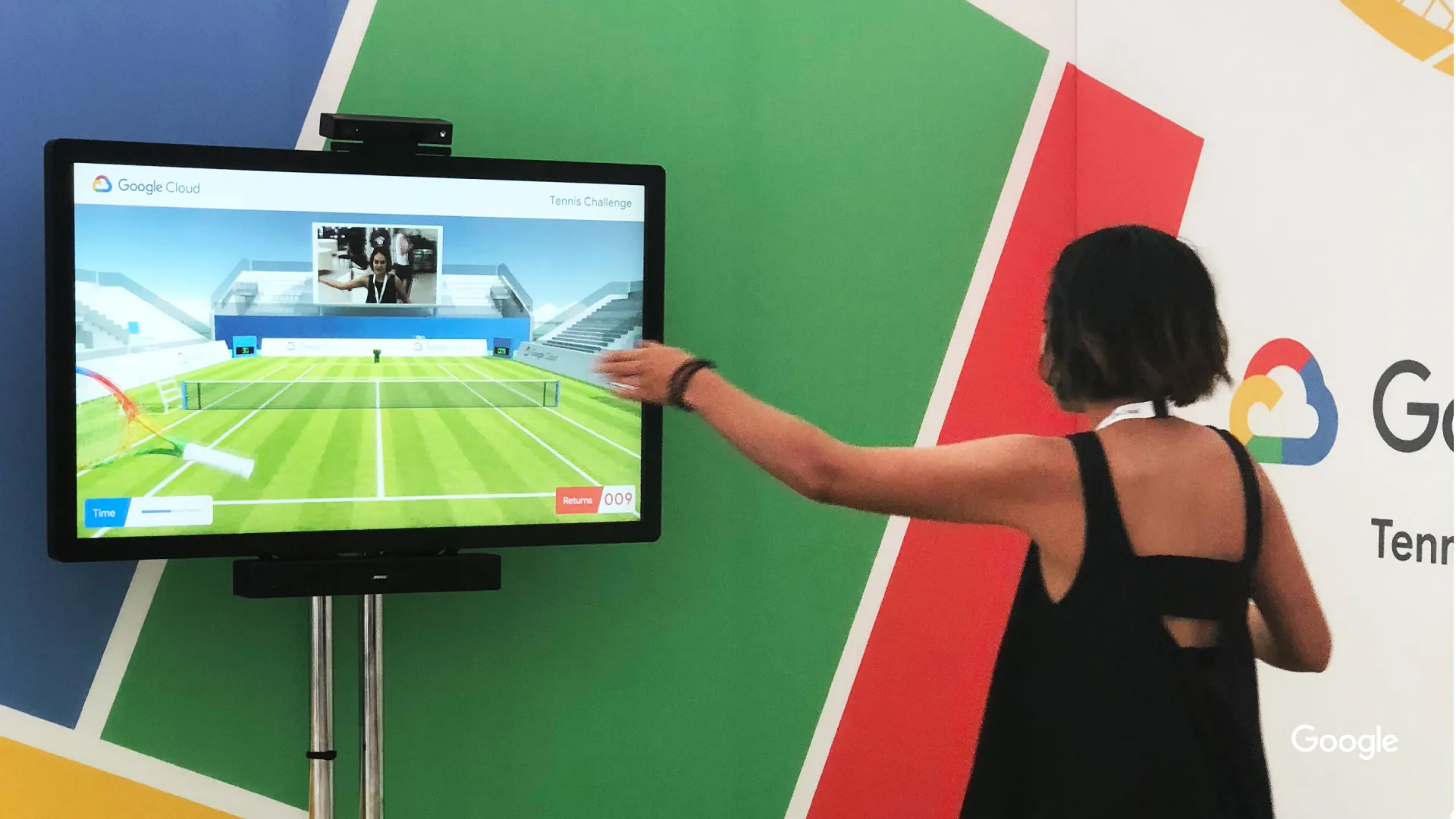
Not every interactive front end needs a framework. Scroll effects, animated reveals and sticky navigation are often better written as plain, class-based TypeScript, and we bring the same discipline to bigger React builds: catching a mistake at compile time instead of in a user's browser.
Pictured: Google Tennis, a Kinect-powered game built for Wimbledon that tracks a player's real swing and turns it into gameplay in real time, exactly the kind of fast-moving state that benefits from being typed properly rather than left to run loose as plain JavaScript.
Already know you want a React app specifically? Our React development page covers that. This one's for TypeScript work beyond a component framework too.
What's included
Wherever it sits (a vanilla frontend, a React app, or the API behind either), typed code is easier to change safely six months in, which is usually when it matters most.
- Type-safe frontend architecture
- Interactive & animated interfaces
- React & React Native applications
- Shared types across frontend & API
- JavaScript-to-TypeScript migration
- Ongoing support & maintenance
Common questions
Isn't this the same as your React development?
A lot of overlap, yes. If you already know a React app is what you need, start on that page. This one also covers TypeScript work outside a component framework, such as animated, interactive marketing pages.
Can you convert an existing JavaScript codebase to TypeScript?
Yes, usually file by file as an incremental migration, rather than one risky rewrite that blocks everything else you need done.
Does TypeScript slow a project down?
A little, up front. Writing types takes marginally longer than not. It tends to pay that back the first time a change would otherwise have broken something silently in production.
How does this pair with a Laravel backend?
Well, we can share type definitions generated from the API, so the frontend and backend stay in sync instead of quietly drifting apart as both change.
Types describe the libraries and APIs behind them. What happens once those change?
Keeping types current as both move is a small, ongoing job. We fold it into support rather than let it go stale.
Websites
Want to see more first? Take a look at our work or explore everything we build.


Meet Storm
A tight-knit, Surrey-based team with 25+ years combined experience turning ideas into finished builds.
We're hands-on at every stage, from first conversation to last line of code, on web, mobile, AR/VR and everything in between.
Meet the team















Need a tech development partner?
Let's chat on how we can help to bring your big idea to life.